A Practical Guide to Wedding Videographer vs Photographer: Do You Need Both?
Photography vs. Videography: Deliverables, Artifacts, and Consumption Habits
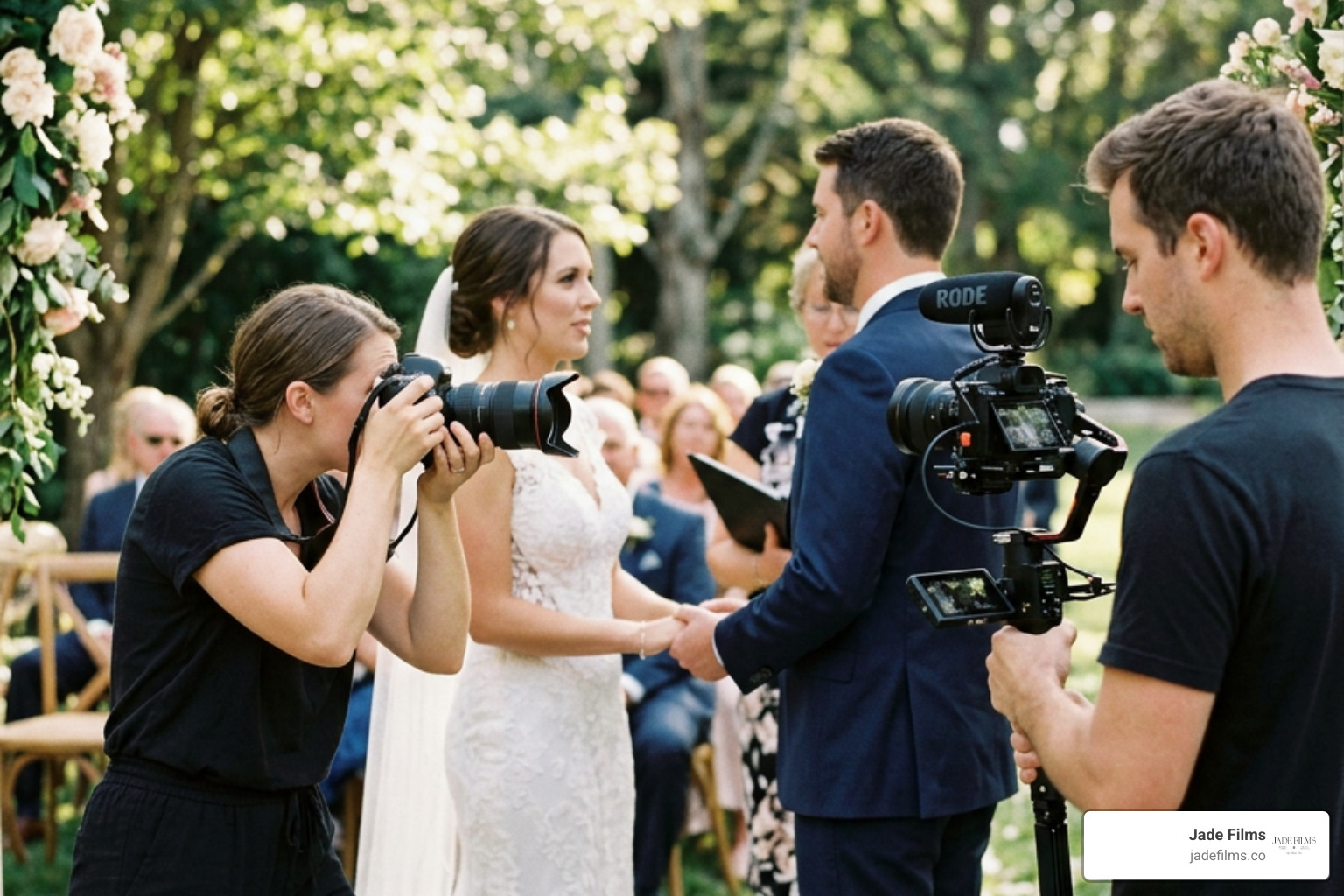
Whether you need both a wedding photographer and videographer depends on your budget and storytelling priorities. Photography is the essential foundation for any wedding, providing timeless still images for albums, wall art, and daily viewing. However, hiring both services is necessary if you want to preserve the sounds, spoken vows, toasts, and authentic motion of the day. If finances are strictly limited, prioritizing a skilled photographer is recommended, but couples who invest in both receive a complete, multidimensional record of their celebration.
Wedding photography and wedding videography serve fundamentally different sensory functions. A photograph freezes a split second of beauty, composition, and emotion. A wedding film, by contrast, gives you back time itself—preserving voice tremors, ambient laughter, background acoustics, and spontaneous dance moves.
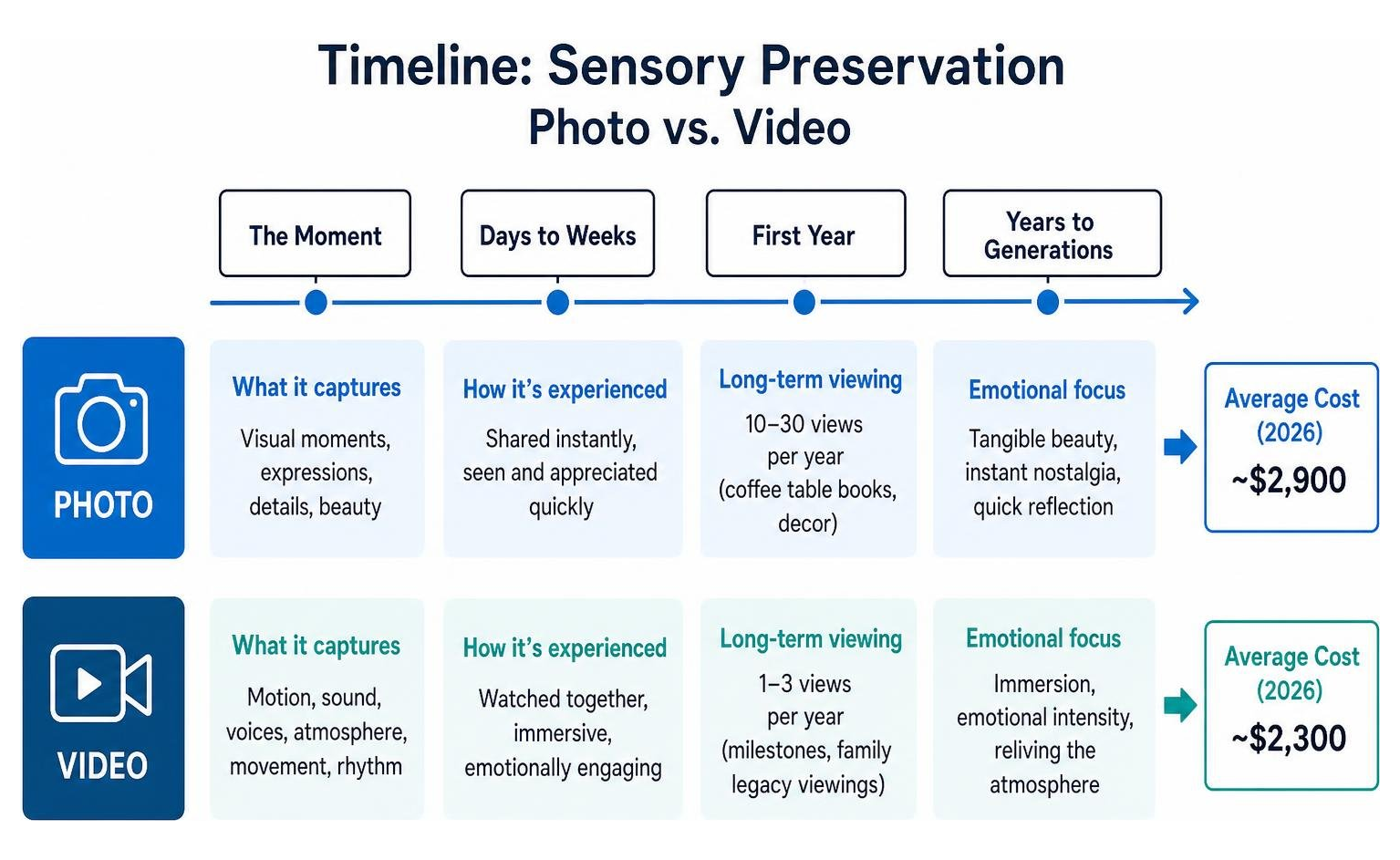
To see how these two mediums compare across physical deliverables, storytelling traits, and long-term viewing habits, look at how couples interact with each over time:
| Feature / Metric | Wedding Photography | Wedding Videography |
|---|---|---|
| Primary Deliverables | High-res gallery, fine art albums, framed wall prints | 4K highlight film, full ceremony video, audio toasts edit |
| Sensory Preservation | Visual details, color palettes, micro-expressions | Motion, spoken audio, ambient room sound, music |
| First-Year Viewing | 50–200+ views (prints, mobile lock screens, social) | 3–8 views (anniversaries, gatherings, social shares) |
| Long-Term Viewing | 10–30 views per year (coffee table books, decor) | 1–3 views per year (milestones, family legacy viewings) |
| Emotional Focus | Tangible beauty, instant nostalgia, quick reflection | Immersion, emotional intensity, reliving the atmosphere |
| Average Cost (2026) | ~$2,900 | ~$2,300 |
Both mediums complement each other naturally. Many couples discover that exploring 5 reasons why wedding photography is a smart investment highlights how tangible keepsakes anchor everyday memories, while video provides the emotional soundtrack that brings those moments back to life.
What Still Photography Captures That Video Cannot
Still photography is uniquely powerful because of its immediacy and physical permanence. A single still image captures micro-expressions—a tear balancing on an eyelash, an exchange of glances between parents across a crowded aisle, or the exact symmetry of your venue decor before guests arrive.
Photographs translate into daily life through physical artifacts:
- Handcrafted heirloom albums displayed on your coffee table
- Framed gallery prints on your living room wall
- Mobile phone wallpapers that greet you dozens of times a day
- Physical prints tucked into thank-you cards for grandparents
You do not need an electronic device, an internet connection, or ten uninterrupted minutes to appreciate a wedding photograph. It lives in your environment, quietly reminding you of your commitment and community every single day. For additional perspectives on this decision, reading Do You Need Both a Wedding Photographer and Videographer? offers great insight into how imagery and motion balance one another.
What Motion and Sound Preserve for Future Generations
While photography captures what a wedding looked like, cinema captures how it felt and sounded. No matter how stunning a photograph is, it cannot replay the cracking cadence in your partner’s voice as they read their promises, nor can it capture the exact inflection of a parent’s toast.
Videography preserves the elements of a wedding day that exist entirely in the auditory and kinetic dimensions:
- The gentle rustle of fabric as you walk down the aisle
- The room erupting into laughter during the maid of honor’s speech
- The exact choreography and rhythm of your first dance
- The spoken words of elderly relatives whose voices become priceless family treasures over time
When planning your film, incorporating wedding vows how the right words create a powerful wedding film story ensures that your ceremony audio becomes the narrative heartbeat of your entire highlight reel.
Furthermore, professional audio recording turns spontaneous reception moments into lasting cinematic scenes. Investing in capturing wedding toasts on film how great audio turns speeches into your favorite scene means you will never lose the spoken wit, warmth, and wisdom shared by your closest friends and family.
Wedding Videographer vs Photographer: Do You Need Both?
To make the best decision for your celebration, it helps to evaluate your wedding through practical considerations: venue architecture, guest logistics, personal values, and budget flexibility.
Every wedding is unique. While some celebrations practically demand dual-medium coverage, others can comfortably rely on still photography alone.
When to Prioritize Each Service
Hiring both a photographer and a videographer becomes essential in scenarios where motion, acoustics, and atmosphere play a defining role in the celebration:
- Personal, Unscripted Vows: If you have spent weeks writing custom vows to each other, losing the spoken delivery of those words is often a couple’s biggest regret.
- Dynamic Cultural Traditions: Ceremonies with energetic dancing, ritual music, and multi-layered customs—such as Nigerian money sprays, Indian Baraats, Jewish Horahs, or Greek money dances—lose much of their magic without sound and movement.
- Venues with Multiple Separate Spaces: When cocktail hour, ceremony, and reception happen in disconnected wings, a photo-video team ensures you experience the spaces and candid moments you were not present to witness.
- Distant or Elderly Loved Ones: A cinematic film allows grandparents who cannot travel, or future generations who were not yet born, to experience your presence, laughter, and affection in real time.
- Choreographed First Dances: If you have spent months taking dance lessons, photography will only capture static poses, whereas video captures the complete sequence and rhythm.
When You Can Confidently Skip Videography
While cinematic films offer profound emotional value, there are distinct circumstances where skipping videography makes practical sense:
- Strict Budget Caps: If your overall wedding budget cannot comfortably accommodate both services without sacrificing food quality, venue comfort, or a high-end photographer, prioritize photography first.
- Ultra-Intimate Elopements or Micro-Weddings: For quiet ceremonies with fewer than 15–20 guests, having multiple camera operators can occasionally feel overwhelming or intrusive.
- Camera-Shy Couples: If the thought of microphones and continuous video observation makes you anxious, keeping your vendor footprint minimal with a single photographer can help you stay relaxed.
- Traditional, Standardized Ceremonies: If your ceremony follows a standard script with no personal vows or planned toasts, the narrative drive for a dedicated film is naturally reduced.
For more comparison frameworks, you can review Wedding Photographer vs. Videographer: Do You Need Both? to evaluate your personal priorities against standard industry recommendations.
2026 Wedding Media Costs, Budget Splits, and Package Options
In 2026, the average combined investment for professional wedding photography and videography in the United States sits around $5,200, which typically represents approximately 15% of an average wedding budget.
Individually, professional wedding photography averages $2,900, while dedicated wedding videography averages $2,300. These figures vary based on market tier, geographic location, and package scope:
- Budget Tiers ($1,500 – $2,500 each): Entry-level coverage, single shooter, standard digital gallery, simple highlight clip with minimal color grading or dedicated audio equipment.
- Standard Professional ($2,500 – $4,500 each): Full-day coverage, secondary shooters, multi-source audio recording, professional cinematic grading, print rights, and comprehensive edits.
- Luxury / Fine Art ($5,000 – $10,000+ each): Multi-day coverage, dedicated creative directors, drone cinematography, archival albums, Super 8 analog film integration, and expedited turnarounds.
If you are planning a celebration in North Texas, reviewing our local guide on wedding videographer cost Dallas provides an in-depth look at regional rates, travel fees, and seasonal pricing shifts.
Splitting the 15% Media Budget: The 60/40 Rule
When couples decide to invest in both services, the most reliable financial guideline is the 60/40 budget allocation rule:
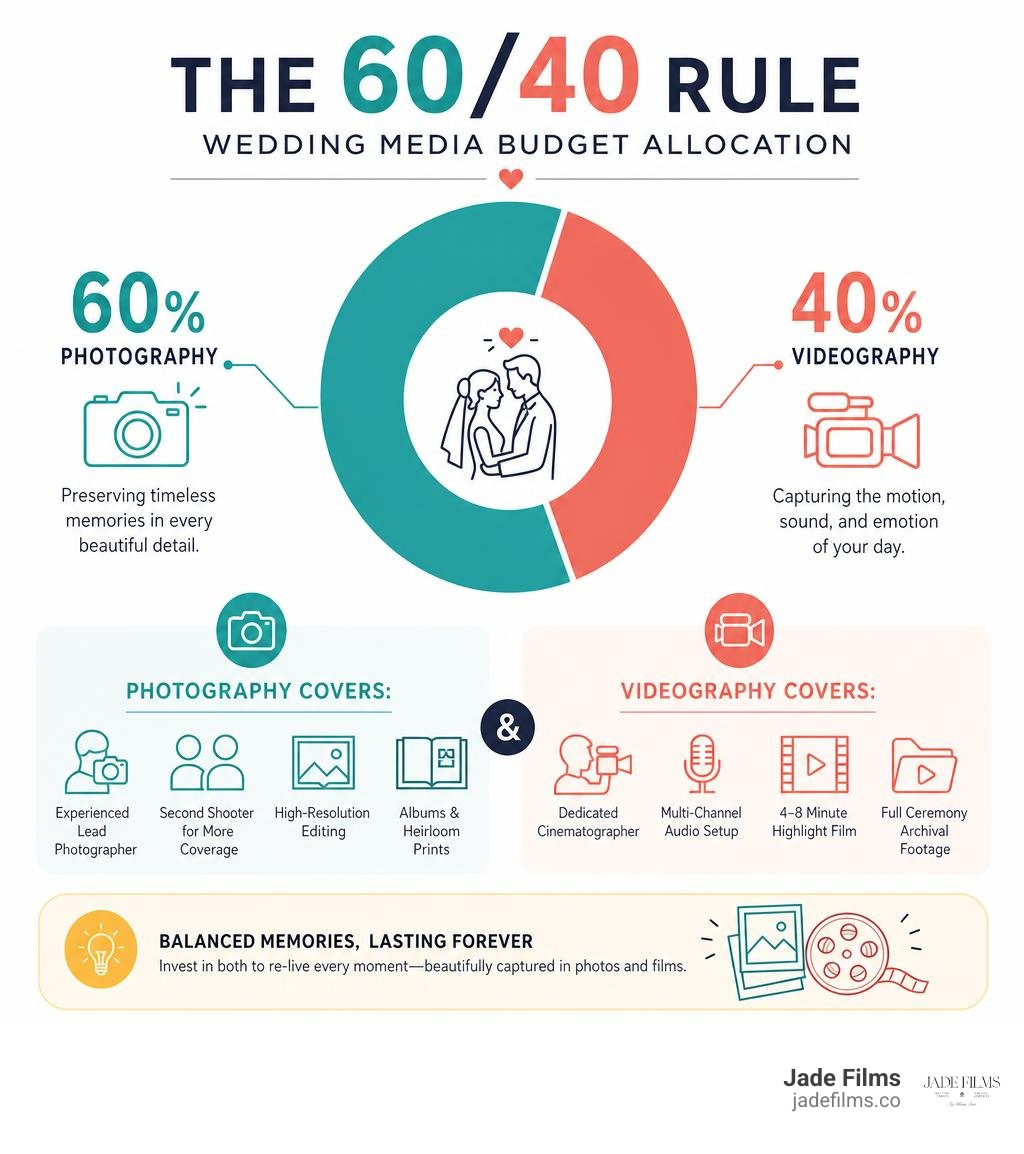
- 60% of Media Budget to Photography: This secures an experienced lead photographer, a second shooter for prep and cocktail hour coverage, high-resolution editing, and physical heirlooms or album credits.
- 40% of Media Budget to Videography: This covers a dedicated cinematographer, multi-channel audio setups (lapel mics on officiant and partner), a 4–8 minute highlight film, and full ceremony archival footage.
To better understand deliverable inclusions such as teaser cuts, raw footage rights, and multi-cam edits, exploring how wedding video packages explained what couples should know details how coverage hours translate into tangible films.
Single Studio Bundles vs. Independent Vendor Teams
Couples often deliberate between booking a unified media studio that provides both photography and videography versus sourcing two independent, specialized vendors. Both models have clear trade-offs:
Hiring a Single Unified Studio:
- Pros: Single contract, unified visual color palette, simplified communication, guaranteed teamwork, and bundled package discounts.
- Cons: Some studios are photography-first businesses that treat video as an afterthought (or subcontract to unknown freelancers). Ensure the studio has a dedicated in-house video team with a consistent portfolio.
Hiring Independent Specialists:
- Pros: You handpick the absolute best artist for each medium based on their distinct creative voice and editing style.
- Cons: Two separate contracts, slightly higher overall cost, and the risk that vendors who have never met might compete for the same physical angles during key moments.
If you choose independent vendors, introducing them via email before the wedding ensures they coordinate seamlessly on the day. For additional perspectives on managing independent vs. unified vendor teams, Wedding Photographer and Videographer: Do You Need Both? provides valuable workflow advice.
Vendor Coordination and Day-of Media Logistics
Having both a photographer and videographer on-site creates a media footprint. When managed professionally, both artists work as a coordinated team, elevating each other’s work without crowding your venue or distracting your guests.
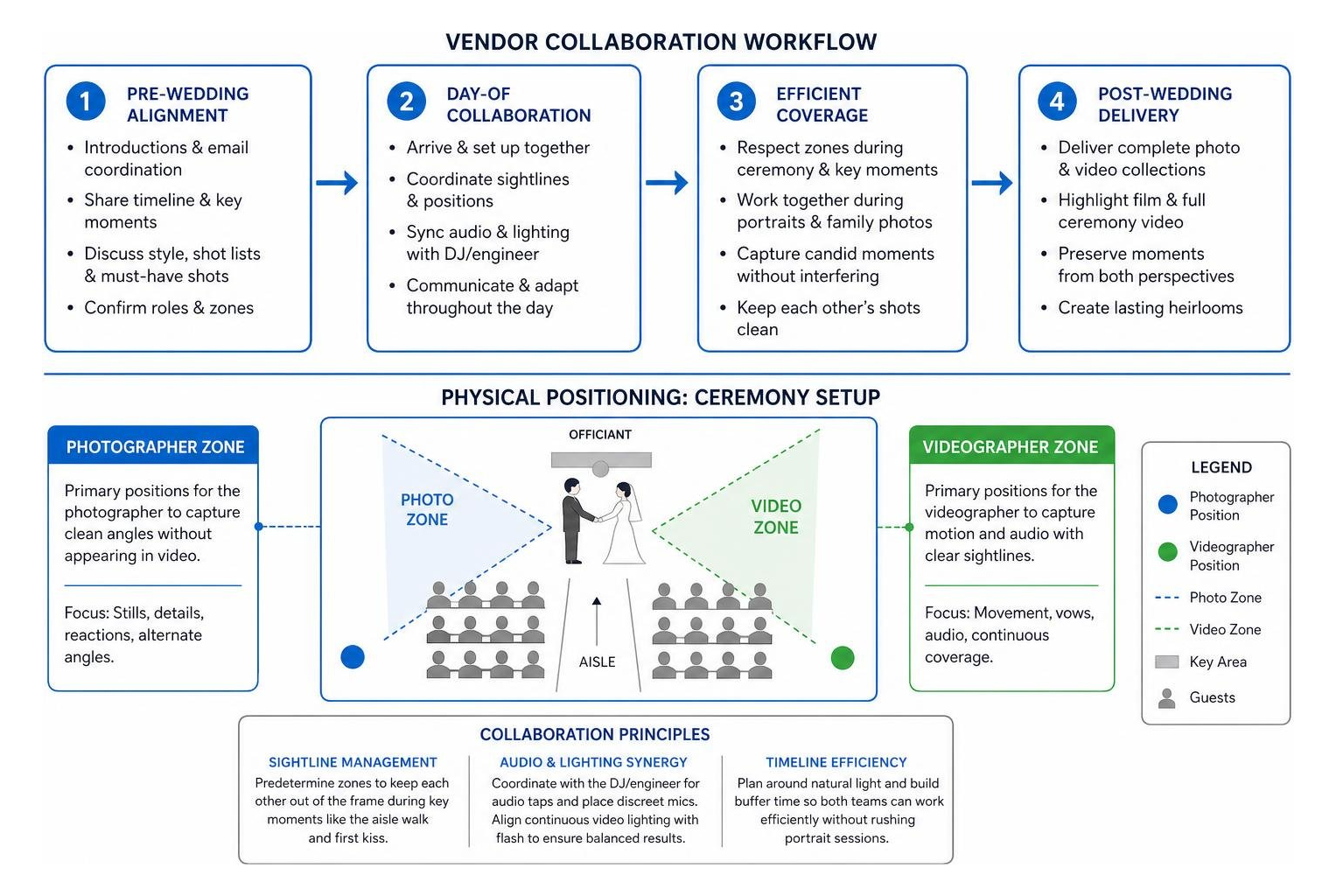
Effective media collaboration relies on three core operational principles:
- Sightline Management: During the ceremony aisle walk and first kiss, the photographer and videographer establish predetermined zones so neither appears in the background of the other’s frame.
- Audio and Lighting Synergy: Videographers coordinate with the DJ or sound engineer for direct board audio taps and place subtle lavalier microphones that do not disrupt formal portraits. Similarly, continuous video lighting is coordinated with flash photography to prevent blown-out exposures.
- Timeline Efficiency: Structuring your schedule around natural light allows both teams to capture portraits efficiently. Following a thoughtful wedding planning timeline how smart planning creates a better wedding film prevents rushed portrait sessions and ensures seamless coverage.
Short-Form Social Clips vs. Archival Cinematic Films
With roughly 21% of modern couples hiring a wedding content creator, many wonder if smartphone clips can replace a professional videographer.
While content creators are great for providing raw vertical clips, behind-the-scenes moments, and 24-hour turnaround reels for TikTok or Instagram Stories, they are not a substitute for cinematic wedding films:
- Smartphone Limitations: Mobile sensors struggle in low-light reception halls, cannot capture high-fidelity multi-track audio during vows, and lack cinematic optical depth-of-field.
- Longevity and Archival Value: Short-form vertical trends fade, but a 4K widescreen cinematic film—graded for timeless color and mastered for sound—remains a permanent family heirloom that endures for decades.
Content creation is best viewed as a fun, fast add-on for social media, rather than an archival replacement for professional videography.
Essential Questions to Ask Before Booking Your Media Team
Before signing contracts with your wedding media professionals, ask these essential questions to ensure expectations align:
-
For Photographers:
- How many edited images are included in the final gallery, and what is your turnaround time?
- Do you provide full personal printing and distribution rights?
- What is your protocol if an equipment failure occurs during the ceremony?
- Have you worked alongside dedicated videographers, and how do you coordinate during key moments like the first look?
-
For Videographers:
- How do you capture audio during the ceremony and reception toasts (direct board audio, lavalier mics, or on-camera mics)?
- What specific films are included (e.g., a 5-minute highlight film, full ceremony edit, or raw footage)?
- Do you edit all films in-house, or do you outsource post-production to third-party editors?
- How unobtrusive is your camera equipment and lighting during the reception dance floor?
Frequently Asked Questions About Wedding Media
Wedding Videographer vs Photographer: Do You Need Both? What If Budget Only Allows One?
If your budget strictly limits you to a single service, prioritize hiring an exceptional wedding photographer. High-quality photography delivers versatile, permanent keepsakes that you will view regularly. A mediocre video from an inexperienced shooter provides less long-term satisfaction than breathtaking portraits. If you must skip video, consider placing an audio recorder near speeches or asking a trusted friend to capture steady, unedited phone clips of your vows.
Can One Photographer Also Film the Wedding Video?
We strongly advise against hiring a single individual who claims they will shoot both photos and video simultaneously. High-resolution photography and cinematic filmmaking require completely different camera settings (shutter angles vs. high shutter speeds), hardware configurations (tripods/gimbals vs. handheld grips), and creative mindsets. A solo shooter attempting both will inevitably miss key moments in both mediums. Always hire dedicated specialists for each role.
How Far in Advance Should Media Vendors Be Booked?
Most reputable wedding photographers and cinematographers book their calendars 10 to 14 months in advance, especially for popular spring and autumn weekend dates. Sourcing your media team immediately after booking your venue and planner ensures you secure your preferred visual artists.
Conclusion: Making the Right Decision for Your Wedding Day
Your wedding day passes in a rapid, joyful blur. Months of meticulous planning culminate in a celebration that concludes in a matter of hours. Long after the florals have faded, the meal has been enjoyed, and the rentals returned, your photos and wedding film are the only investments that increase in value over time.
Photography preserves the stunning, quiet portraits you will hang on your walls and cherish in heirloom albums. Videography preserves the voices, laughter, movement, and genuine atmosphere of the people you love most gathered in one room.
If your budget allows, booking both guarantees that no dimension of your celebration is lost to time. At Jade Films, our team specializes in capturing cinematic wedding videography and photography with a candid, storytelling-first approach throughout Dallas-Fort Worth and beyond. By preserving your celebration with emotional depth and artistic intention, we ensure you can step back into your wedding day whenever you wish.
