Wedding Vows: How the Right Words Create a Powerful Wedding Film Story
The ceremony was quiet. No music. No movement. Just two people standing across from each other.
Then one line changed everything.
The groom looked up and said, “I knew I wanted to marry you the night you stayed up with me fixing my broken sink… even though we both had no idea what we were doing.”
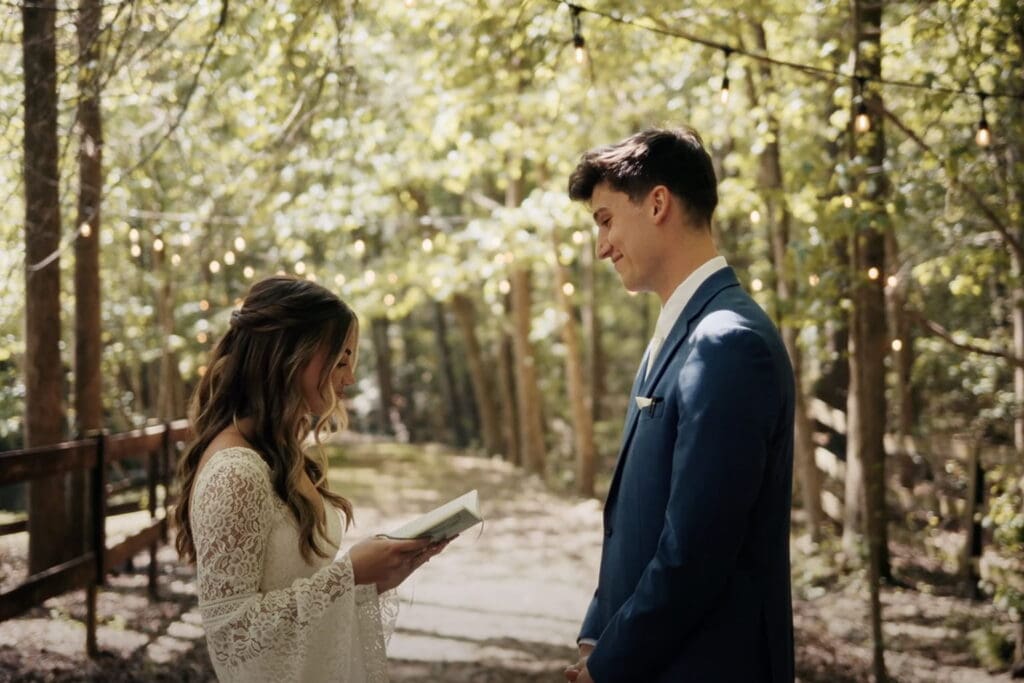
The room laughed. Then it went silent.
That single detail did more than entertain—it revealed their relationship. It gave context to every glance, every smile, every tear that followed.
This is what most couples do not realize about wedding vows.
They are not just part of the ceremony/ They become the emotional voice of your wedding film and shape how your story feels when you watch it years later.
As a wedding videographer, I have seen it again and again. The strongest films always start with strong vows. The words you choose will guide your story long after the day ends.
If you are planning your vows, this guide will show you how to write them with intention—so they feel natural, meaningful, and powerful on film.
Why Wedding Vows Matter More Than You Think for Your Film
Most couples focus on visuals. They think about the venue, the lighting, and the décor.
But your film is not built on visuals alone. It is built on meaning.
Your vows shape:
- The narrative structure of your film
- The emotional pacing of each scene
- The voiceover that connects every moment
When vows feel personal and clear, your film flows naturally. Each clip feels connected. Each moment has context.
When vows feel generic, the opposite happens. The film looks beautiful, but it lacks depth. It feels like a collection of clips instead of a story.
Strong vows turn footage into something lasting. They give your wedding film a voice.
What Makes Wedding Vows Memorable (From a Filmmaker’s Perspective)
After filming hundreds of ceremonies, patterns become clear. The vows that stay with people are never the most polished. They are the most specific.
Three elements make the difference.
1. Specific Memories
Generic lines fade quickly. Specific details stay.
Instead of:
- “You make me happy”
Think:
- “You bring me coffee every morning, even when you are running late”
That detail creates a visual. It creates emotion. It gives your film something real to build around.
2. Real Promises
A vow should feel like a commitment, not just a feeling.
“I will love you forever” sounds nice.
“I will always be the one who calms you down when life feels overwhelming” feels real.
Clear promises create stronger emotional moments on camera.
3. Brevity
The best vows are short.
Aim for one to two minutes. That length keeps your delivery strong and your audience engaged. It also helps your videographer use your vows effectively throughout your film.
Long vows often lose impact. Short vows stay focused and powerful.
How to Write Wedding Vows That Feel Natural and Film Well
If you feel stuck, start simple. You do not need perfect words. You need honest ones.
Start With Your Story
Follow a natural timeline:
- How you met
- When things changed
- Why you are here today
This structure gives your vows a clear flow. It also helps your videographer build a story that mirrors your relationship.
Focus on Specific Details
Think about small moments.
- A habit
- A memory
- A shared experience
These details make your vows feel real. They also make your film more personal.
Include Clear Promises
Add three to five promises that reflect your life together.
Mix emotional and practical:
- “I promise to support your dreams”
- “I promise to always make you laugh when you need it most”
This balance creates depth.
Keep It Short and Structured
Stay within 150–300 words.
That range keeps your delivery steady and your message clear.
Write Like You Speak
Avoid formal language. Avoid phrases that do not sound like you.
Your vows should sound like a conversation with your partner. That authenticity creates the strongest emotional response on camera.
Wedding Vows Script Template (Simple and Effective)
If you want a starting point, use this structure:
- Address your partner
- Share a meaningful memory
- Describe what you admire about them
- Make 3–5 promises
- End with a clear closing statement
Example closing:
- “I choose you today, and I will keep choosing you every day.”
This structure works for almost every style of vows.
Wedding Vows Examples That Translate Well on Film
Romantic Example
“I knew from the beginning that you were different. You made me feel calm in a way I had never felt before. I promise to protect that feeling. I promise to stand beside you through every change, and to build a life that feels like home for both of us.”
Personal with Light Humor
“I love that you still cannot cook pasta without asking me how long it takes; I promise to keep answering that question for the rest of our lives; I promise to support you, challenge you, and laugh with you every step of the way.”
Short and Simple
“I choose you; I promise to love you, support you, and grow with you; I will stand beside you in every season of life.”
Traditional Style
“I take you as my partner; I promise to love and support you in good times and difficult times; I will honor you and stand beside you all the days of my life.”
Each style works. The key is delivery and sincerity.
Common Wedding Vow Mistakes That Hurt Your Video
Even strong writing can lose impact if you miss a few key details.
Avoid these common mistakes:
Writing Too Much
Long vows often lead to rushed delivery. That weakens emotion and audio clarity.
Using Generic Language
Phrases that could apply to any couple do not create connection.
Overloading with Humor
One or two light moments work well. Too many jokes reduce emotional depth.
Waiting Until the Last Minute
Rushed vows feel unstructured. They also increase stress on the day.
Mismatched Tone Between Partners
If one person writes a long emotional speech and the other writes a short casual vow, the moment feels uneven.
How to Deliver Your Wedding Vows for the Best Video Result
Your delivery matters as much as your words.
Follow these simple guidelines:
- Speak slowly
- Pause between sentences
- Look at your partner
- Use a vow book instead of your phone
- Practice out loud before the wedding
Practicing helps you stay calm and confident. It also improves how your vows sound on video.
Personal vs Traditional Wedding Vows (Which Is Better?)
There is no single right answer.
Traditional Vows
- Structured
- Timeless
- Easy to follow
Personal Vows
- Unique
- Story-driven
- Emotionally specific
Hybrid Approach
Many couples combine both.
They share a short personal section, then follow with traditional vows together. This creates balance and consistency.
From a film perspective, the hybrid approach often works best.
When and How to Write Your Wedding Vows
Start early enough to give yourself space.
Timeline
- Begin writing 3–4 weeks before your wedding
- Draft early, then revise
Process
- Write a rough version without editing
- Cut anything that feels generic
- Practice reading it out loud
You can also ask a trusted friend to review your vows. This helps ensure both partners match in tone and length.
Wedding Vows Checklist
Before Writing
- Reflect on your relationship
- Choose a tone
While Writing
- Include one or two specific memories
- Add three to five promises
- Keep it concise
Before the Wedding
- Practice out loud
- Time your delivery
- Prepare a clean copy
FAQs About Wedding Vows
What are the basic wedding vows?
Basic vows include three elements: a declaration of commitment, promises for the future, and a closing statement. Traditional vows often follow a set format, while personal vows allow more flexibility.
How long should wedding vows be?
Aim for one to two minutes. This usually equals 150 to 300 words. This length keeps your message clear and helps maintain emotional impact during the ceremony and in your film.
What are good wedding vows examples?
Good vows include:
- Specific memories
- Clear promises
- A natural tone
The best examples feel personal and honest rather than polished or formal.
Do we have to write our own vows?
No. Many couples choose traditional vows, and they still create meaningful moments. You can also combine personal and traditional vows for a balanced approach.
When should I start writing my wedding vows?
Start at least three to four weeks before your wedding. This gives you time to write, edit, and practice without stress.
What if I get emotional during my vows?
This is normal. Pause, take a breath, and continue. Emotion adds authenticity to your vows and often creates the most powerful moments in your film.
Should we share vows with each other beforehand?
Some couples do, and some do not. If you want balance in tone and length, sharing with a third party can help. If you prefer a surprise, agree on general guidelines in advance.
Should I memorize my wedding vows?
No. Reading from a vow book is common and helps you stay focused. It also looks clean and intentional on camera.
Your Wedding Vows Shape Your Story
Your wedding day will move quickly.
The details will fade. The timeline will blur. But your vows will remain.
They will be the words you hear when you watch your film years from now. They will remind you how the day felt, not just how it looked.
Do not aim for perfect words. Aim for true ones.
The most meaningful vows are not the most polished. They are the ones that sound like you.
Plan Your Film With Intention
At Jade Films, we do more than capture your wedding day. We help you tell your story in a way that feels honest and lasting.
Your vows are a key part of that story.
If you want a film that feels personal, intentional, and emotionally real:
- Explore our portfolio of wedding films
- Reach out early to secure your date
- Let us help you shape a timeline and wedding videography that works
Your story already exists. The right film makes sure you never lose it.
