Capturing Wedding Toasts on Film: How Great Audio Turns Speeches Into Your Favorite Scene
A wedding toast can change the feel of a wedding film in seconds.
A toast has real voices, real timing, and real reactions. Moreover, a toast has the kind of unscripted lines that couples repeat for years. Photos can show the smile. Video can replay the laugh, the pause, and the voice crack.
This guide explains how wedding videographers capture speeches clearly, why audio is the hard part, and what you can do to help your film sound clean.
You will also get:
- A toast structure template that speakers can follow
- Sample toast lines you can borrow
- A short audio planning checklist you can paste into your timeline
Key Takeaways
- Great audio makes wedding toasts memorable. Clear sound captures emotion, voice, and real reactions, which makes these moments some of the most replayed parts of a wedding film.
- Audio is the hardest part to get right. Noise, mic distance, and room setup can ruin recordings, so videographers use multiple audio sources to protect quality.
- Setup and planning improve results. A fixed speech location, good lighting, short timing, and a clear schedule help both audio clarity and visual storytelling.
- Simple speaking habits make a big difference. Holding the mic close, pausing for laughs, and following a short structure keep toasts clear, engaging, and easy to capture.
Why wedding toasts feel better on video than in photos
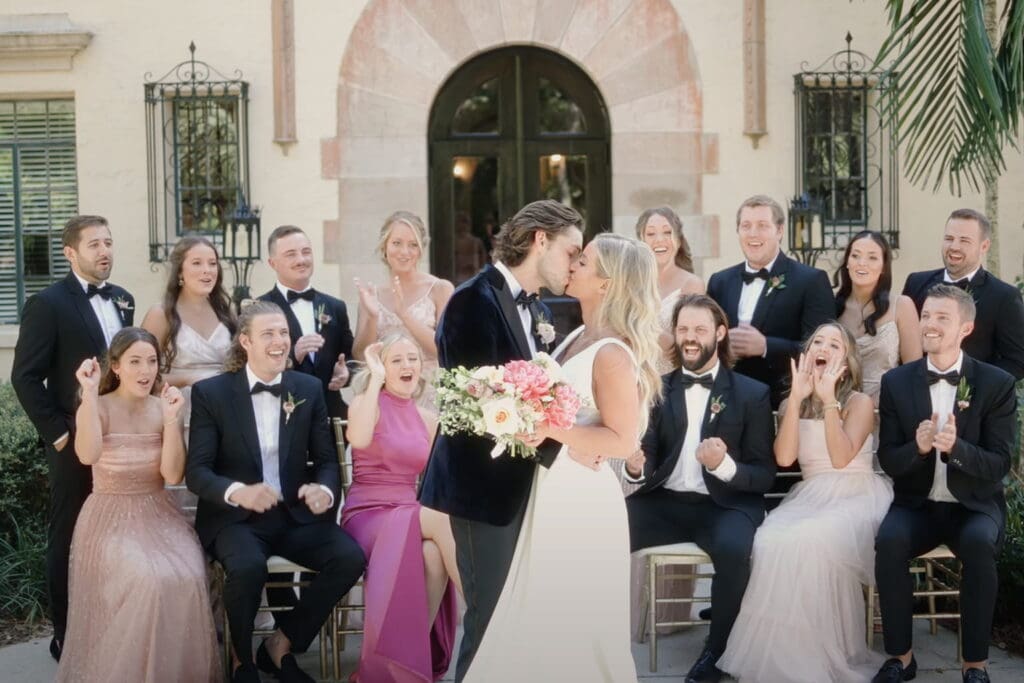
A toast works because it has sound plus faces.
Video captures:
- The speaker’s voice and cadence
- The couple’s reaction in real time
- The room’s laugh, gasp, and applause
- The small moments between lines
A photo can show a raised glass. A video can replay a father’s shaky inhale before he says, “I am proud of you.”
That is the payoff. That is also why couples often rank vows and toasts as the scenes they rewatch most.
What makes toast audio hard at weddings
A reception has noise by design.
Common audio problems include:
- Loud music bleeding into the microphone
- A DJ speaker that points at the mic and causes feedback
- A speaker who holds the mic at chest level
- Guests who cheer right next to the mic
- Plates, silverware, and bar noise during dinner service
Even a great camera cannot fix bad audio.
That is why pro teams treat speeches like a live sound event, not like background footage.
How wedding videographers capture speeches clearly
Most teams use layers. One source can fail. Two sources give safety.
1) They get a clean feed from the DJ or sound board
A DJ often runs the microphone through a mixer.
A videographer can record a direct feed from that mixer. This feed can sound clean because it skips the room echo.
This approach can fail if the DJ clips the levels, routes the mic wrong, or changes settings mid-toast. So pros still record backups.
2) They place a recorder near the speaker
A small audio recorder can sit near a speaker, a stand, or a lectern.
This recorder can capture clear voice sound while the room stays lower in the mix.
3) They mic the person who matters most
Some teams place a small lav mic on:
- The person giving the toast
- The couple, so they capture reactions and whisper responses
This depends on the plan, the wardrobe, and the comfort level.
4) They record ambient sound on-camera
On-camera sound helps with:
- Room tone
- Applause
- Laughter
- Clinking glasses
That ambient layer makes the edit feel real, even when the main voice comes from a board feed.
Where to place speeches for the best sound and film
Pick a speech spot with a “quiet background”
A speaker should face the couple, with fewer distractions behind them.
Avoid:
- A bar line behind the speaker
- The kitchen door behind the speaker
- A dance floor speaker stack behind the speaker
A quiet background helps audio. It also helps the frame.
Put the couple in good light
If the couple sits in a dark corner, the camera needs higher ISO and the footage can look noisy.
If you can, place the head table where light hits faces, not backs.
Keep the speaker close to the couple
Distance kills emotion.
A closer setup helps:
- Camera angles
- Face reactions
- Audio clarity
Timing rules that make toasts land on film
A toast can feel long in the room. A toast can feel longer on replay.
Many wedding resources suggest that a toast stays short and focused. Many land best when they stay under about 3–5 minutes.
Practical timing tips:
- 1–3 speakers often works best
- 2–4 minutes per speaker often feels right
- 10–15 total minutes often keeps energy up
If you want more speakers, you can use a “round two” later in the night, or you can move some messages into a video guestbook idea.
The toast structure template speakers can follow
You can share this with your best man, maid of honor, parents, and friends.
Wedding toast template (simple and strong)
1) Introduce yourself (10–20 seconds)
Say your name. Say your relationship to the couple.
2) Share one story (45–90 seconds)
Tell one short story that shows character. Keep it kind. Keep it clear.
3) Connect the couple (30–60 seconds)
Name what you admire about them together.
4) Offer a wish (10–20 seconds)
Give a future-focused line.
5) Deliver the toast line (5–10 seconds)
Ask guests to raise a glass. End clean.
Target length: 2–4 minutes.
Sample toast lines you can borrow
Use these as closers, or use them as anchors if a speaker freezes.
Short classic toast lines
- “To love, laughter, and a life you build together.”
- “To the two of you, and to the home you will make.”
- “To a long life, a full table, and a calm heart.”
Warm and modern lines
- “May your hard days stay rare, and may your best days stay close.”
- “May you keep choosing each other, even on the boring Tuesdays.”
- “May your love stay honest, and may your partnership stay fun.”
Texas-friendly lines that fit a Dallas reception
- “May your love stay steady, like a Texas sunset.”
- “May your home stay loud with friends, and safe in every storm.”
- “May your story stay big, and may your joy stay simple.”
A few “light laugh” lines that stay safe
- “May you always share dessert, and may you always share the remote.”
- “May your only fights be about where to eat.”
- “May you keep each other laughing for a long time.”
If you want more examples for inspiration, you can scan curated lists like this one from Brides and then rewrite lines in your own voice. (Do not copy long passages.)
The mic basics that save toast audio
These rules feel small. These rules fix most audio issues.
Hold the mic close
A handheld mic works best when it stays close to the mouth.
Audio guides often recommend speaking within a few inches, not at arm’s length.
Speak across the mic, not into it
Plosive sounds like “P” and “B” can pop.
Speaking slightly across the mic helps reduce pops.
Pause for laughs
A speaker should stop when guests laugh.
That pause helps the editor preserve the punchline and the room reaction.
Do not tap the mic
A tap can spike the audio and ruin a clean track.
If someone needs to test a mic, they should say, “Can you hear me?” at a normal volume.
What couples can do to help their videographer capture toasts
You do not need to run sound. You just need to plan for it.
1) Ask the DJ what mic the speaker will use
Ask:
- “Do you have one wireless handheld mic for speeches?”
- “Do you have a spare mic if this one fails?”
2) Tell the coordinator when speeches happen
Surprise speeches can happen during dinner service, and audio will suffer.
A clear schedule helps everyone.
3) Ask the venue to reduce clatter during toasts
If you can pause plate clearing for 10 minutes, you will hear a difference.
4) Keep the speaker in one spot
Wandering speakers create shifting audio levels and messy edits.
A single “toast spot” works best.
Audio planning checklist you can paste into your timeline
Copy this section into your wedding day notes.
Wedding Toast Audio Checklist (Copy + Paste)
- Confirm the toast time with the planner and DJ.
- Choose a single speech location with a clean background.
- Ask the DJ for a wireless handheld mic for speeches.
- Ask the DJ if a sound board feed is available for the video team.
- Plan 2–4 minutes per speaker.
- Pause dinner service and bar announcements during toasts.
- Remind speakers to hold the mic 3–6 inches from their mouth.
- Remind speakers to pause for laughs and applause.
- Confirm the order of speakers and names for the intro.
FAQ: Wedding toasts on video
Are wedding toasts the same as wedding speeches?
Many people use the words the same way. A toast often means the closing lines with raised glasses. A speech often means the full message.
How long should wedding toasts be?
Many planning resources suggest that toasts stay short and focused, often around a few minutes per person.
What should a speaker avoid in a wedding toast?
A speaker should avoid:
- Ex stories
- Embarrassing details
- Mean jokes
- Inside jokes that only three people understand
A toast should stay kind and clear.
What is the single biggest factor in great toast audio?
Mic distance. A close mic captures voice. A far mic captures room noise.
Preserve the Voices You Will Want to Hear Again
A wedding day moves fast.
Music fades. Guests leave. The room changes.
But the voices stay.
A father’s pause. A best friend’s laugh. A quiet “I love you” that was never planned. These are the moments couples return to years later. These are the lines that carry meaning long after the day ends.
Wedding toasts are not just part of the timeline. They are part of the story.
Clear audio and thoughtful coverage make the difference between a moment you remember and a moment you can relive.
Work With a Team That Captures the Full Experience
At Jade Films, we focus on more than visuals. We focus on sound, timing, and the emotional flow of your day. We plan for clean audio, strong coverage, and the moments that matter most when you watch your film years from now.
If wedding toasts matter to you, we will make sure they are captured with clarity and intention.
Let’s Talk About Your Wedding Film
If you are planning a wedding in Dallas or anywhere in Texas, we would love to hear about your day.
Reach out to Jade Films to check availability, view full wedding films, and learn how we approach audio, storytelling, and coverage.
Your story deserves to be heard as clearly as it is seen.
