Wedding Vows on Film: What Are Vows?
You can forget your centerpieces. You can forget the exact shade of napkin. But you will never forget the moment your partner’s voice breaks on a sentence they practiced in secret.
That is why vows matter on film.
A photo can freeze a tear on a cheek. A wedding film can hold the shaky breath before a promise, the laugh that cuts the tension, and the quiet “I love you” that comes out smaller than you expected.
This guide answers a common question—what are vows—and it explains why vows become the emotional backbone of a wedding film. You will also get a simple vow template, vow writing tips, and sample wedding vows you can adapt to your day.
What Are Vows?
Wedding vows are spoken promises you make to each other during your ceremony. You say them in front of your guests as a public commitment. Many couples use traditional vows. Many couples write personal vows that include their own language and stories. (You can read a clear definition and background here: WeddingWire’s overview of wedding vows.)
Vows vs. “I Do”
Vows often include the promises. “I do” often appears during the declaration of intent. Your officiant leads that part. Your officiant also makes sure the ceremony follows the rules in your area and your tradition.
What Wedding Vows Usually Include
Most vows include:
- A few words about what your partner means to you
- A short reflection on your relationship
- Clear promises you plan to keep
- A closing line that seals the commitment
If you only remember one rule, use this: vows are promises first.
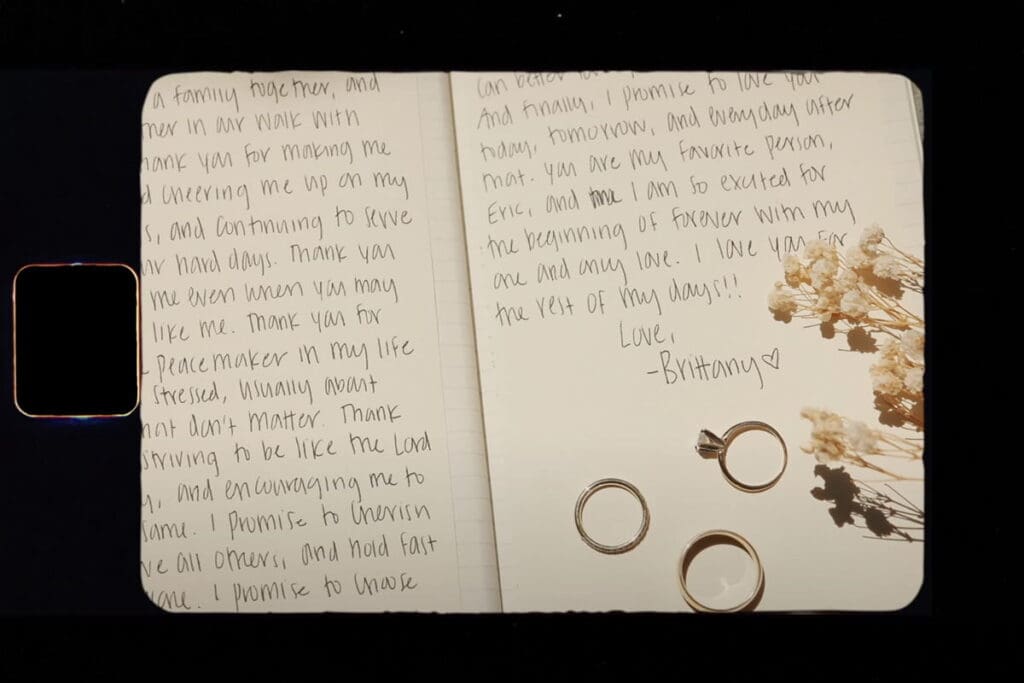
Why Wedding Vows Matter More on Film Than in Photos
Film captures voice, timing, and reaction
Photos show faces. Film captures voice; film captures pacing; film captures the pause when you lose your place for half a second; and film captures your partner’s reaction in real time.
That “real time” part is the difference.
When you watch your vows later, you do not just remember the words. You relive the moment.
Vows create high replay value
Couples rewatch vow audio because it stays meaningful. Your vows matter on year one. Your vows matter on year ten. The words become a record of who you were and what you promised.
Vows give your film a story spine
As editors, we build a film around a story arc. Vows give us the language for that arc. One honest sentence can carry an entire sequence.
How Vows Shape the Story of Your Wedding Film
Most strong wedding films use vows in one of three ways:
1) Vows as the film’s narration
We often weave vow lines over:
- getting ready moments
- letter reading
- first look
- portraits
- walking into the ceremony space
- the first seconds after the kiss
This structure turns a highlight film into a personal story instead of a pretty montage.
2) Vows as emotional anchors
Some lines hit harder than others. Specific promises land. Simple language lands. A clear “I promise” line gives the editor a clean audio beat to cut to.
3) Vows paired with other audio
Vows mix well with:
- toasts
- an officiant’s welcome
- a parent reading
- crowd reactions and ambient sound
This layering makes your film feel full and real.
Audio Capture: How to Make Sure Your Vows Sound Clear
Vows only work on film if we can hear them.
Audio quality depends on planning. It also depends on backups. This matters even more for Texas weddings because outdoor ceremonies often bring wind, wide-open spaces, and speaker setups that change fast.
What usually goes wrong
- Wind noise outdoors
- A mic that sits too far from your mouth
- A DJ feed that distorts
- A reader who speaks softly into the paper
- A speaker that points at the mic and causes feedback
What your videographer aims to do
A good team often uses more than one source:
- a lav mic on the officiant or groom
- a recorder on the officiant mic
- a feed from the DJ board when possible
- a second camera mic as a backup layer
If you want a deeper explainer on how vow length and delivery affects the ceremony experience, this practical guide is helpful: AMM’s guidance on vow length and pacing.
What you can do to help your audio
- Speak up one notch more than normal
- Pause between sentences
- Face your partner, but keep your chin level
- Avoid whispering
- If you read vows, hold the page lower than your mouth so your voice stays open
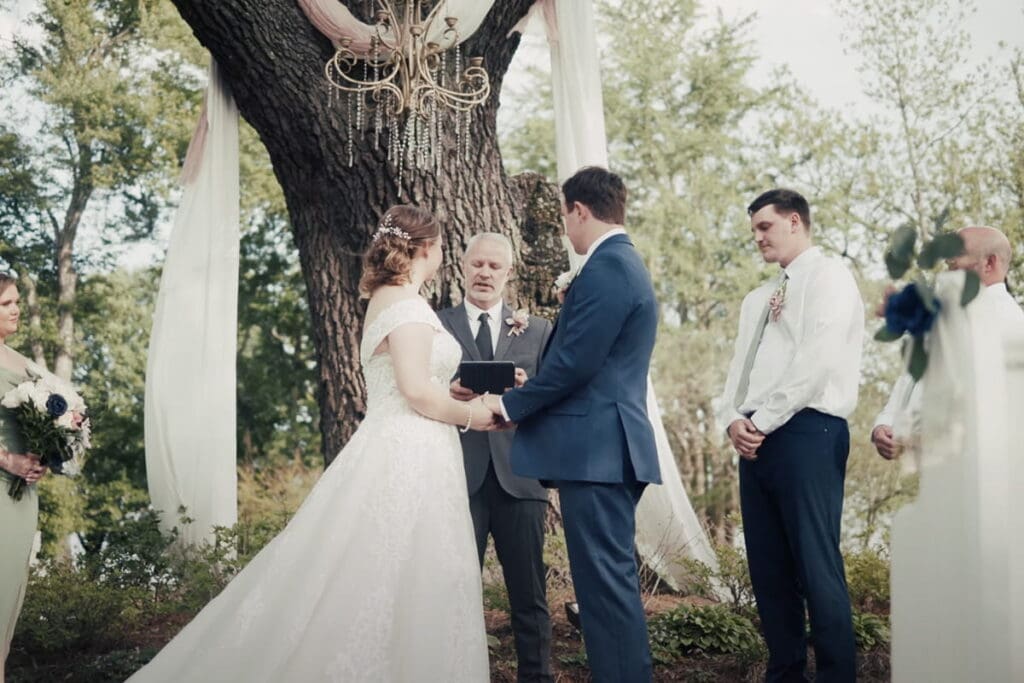
How Long Should Wedding Vows Be?
Most couples land in a sweet spot at about two minutes each. That pace keeps guests engaged and keeps the ceremony moving.
A solid target is about 250–300 words per person, which often lands around two minutes at a normal speaking pace. (The Knot breaks down typical word count and pace here: The Knot’s vow writing tips.)
If you want to go shorter, that is fine. If you want to go longer, do it with intention. Keep the promises clear and avoid turning vows into a long speech.
A Simple Wedding Vow Template That Sounds Great on Film
Use this template if you feel stuck. It keeps the structure clean. It also makes your vows easy to deliver.
Step 1: Open with a direct line (1–2 sentences)
- Say who they are to you.
- Say what this moment means.
Examples:
- “You are my home, and today I choose you.”
- “You make my life feel steady, and I promise to keep choosing you.”
Step 2: Name one or two relationship truths (2–4 sentences)
Pick details that most guests can follow. Keep it simple.
Examples:
- “You make space for my dreams.”
- “You keep me calm when life gets loud.”
Step 3: Make 5–8 clear promises (the core)
Promises should sound like actions.
Examples:
- “I promise to listen before I react.”
- “I promise to protect our time together.”
- “I promise to stay kind when we disagree.”
Step 4: Close with a future-facing line (1–2 sentences)
End with commitment and direction.
Examples:
- “I will build a life with you, one day at a time.”
- “I love you, and I am ready for what we become together.”
How to Write Wedding Vows That Feel Personal (Without Feeling Like a Performance)
Use specific language
Specific beats generic.
Better:
- “I promise to make Sunday mornings slow when you need rest.”
Less effective:
- “I promise to always love you.”
You can still include classic lines. Just pair them with personal actions.
Keep humor clean and quick
Humor works best when it does two things:
- it sounds like you
- it respects the moment
One funny line is usually enough.
Avoid private stories your guests cannot follow
If a story needs five minutes of context, cut it. Save it for a private letter. Film loves clarity.
Practice out loud
Read your vows out loud several times. You will find awkward lines fast. Vogue also shares a solid structure and practice advice from professional vow writers here: Vogue’s guide to writing wedding vows.
Sample Wedding Vows You Can Adapt
These samples keep the language simple and film-friendly. You can copy a line, then rewrite it in your voice.
Sample wedding vows (classic and personal)
“I love you for the way you show up, even on hard days; I promise to keep choosing you with my words and my actions; I promise to be honest, even when it feels easier to stay quiet; I promise to make our home a place where we both feel safe; I promise to laugh with you, to learn with you, and to build a life that feels like ours.”
Sample wedding vows for him (steady and direct)
“Today I take your hand and I take your heart seriously. I promise to respect you when we agree and when we do not; I promise to be patient when life tests us; I promise to show you love in the small moments, not just the big ones; I promise to protect our relationship with time, effort, and honesty; I promise to be your partner in every season; I love you, and I am proud to be yours.”
Sample wedding vows (short and emotional)
“You are my best friend. You are my favorite place. I promise to keep our life full of honesty and laughter; I promise to stay close to you, even when the days feel heavy; I love you, and I choose you for all of my days.”
Sample wedding vows (light humor, still respectful)
“I love you for your mind, your heart, and your calm; I promise to be your teammate and your safe place. I promise to support your goals and protect our peace; I promise to keep the fridge stocked and the bad jokes coming; I love you, and I choose you every day.”
What Are the Seven Vows of Marriage?
People often ask this because “seven vows” appears in several cultural contexts. In many Hindu wedding traditions, couples take part in Saptapadi, also called the seven steps. Each step represents a promise and a shared commitment. (You can read a clear explainer here: The Knot’s overview of Saptapadi and also here: Art of Living’s guide to Saptapadi.)
If you have cultural vows or vow-like rituals, tell your videographer early. Those moments often carry deep story value, even when the ceremony does not include personal vows spoken line by line.
Who Usually Says Their Vows First?
Tradition varies by religion, culture, and ceremony script. In many Western ceremonies, the groom often goes first, but modern couples often choose an order that fits them. (Brides.com explains the tradition and modern options here: Who says vows first?.)
If you feel unsure, ask your officiant. You can also decide based on who feels calmer speaking first.
FAQs About Wedding Vows
What are examples of vows?
Vows are promises like:
- “I promise to stay honest with you.”
- “I promise to support your goals.”
- “I promise to stay kind when we disagree.”
What is the purpose of a vow?
A vow marks commitment; a vow turns love into spoken promises; and a vow gives your marriage a shared set of intentions you can return to later.
Who usually says their vows first?
Many ceremonies place the groom first, but couples often choose their own order now. Your officiant sets the flow.
How long should wedding vows be?
Aim for about two minutes each. A strong target is about 250–300 words per person.
A Quick “Vows on Film” Checklist
Use this list one week before the wedding.
- I have a printed copy of my vows
- I practiced reading them out loud at least three times
- I marked pauses and slow points
- I told my videographer if we will read vows privately
- I asked the officiant where we will stand and where the mic will be
- I planned vow length within a two-minute range
- I avoided jokes that could feel awkward in front of family
Why We Build Films Around Vows
Vows give your wedding film meaning. They turn beautiful footage into a story with voice and intention. They also let you hear your partner again, exactly as they sounded on that day.
If you want a film that puts your vows first, tell us early. We will plan audio with your officiant and DJ, and we will build an edit that lets your words lead.
Want help planning vow audio and vow moments for your wedding day? Contact Jade Films and tell us what kind of ceremony you are having. We will help you capture vows clearly and keep the moment real.
